
The policy, legislated by the Coalition under Scott Morrison in 2021, raised student fees on arts, business, and law degrees while easing the cost of degrees in STEM, health, and education – perceived by the Commonwealth as a “national priority”.
“Very few students changed what they wanted to study because of fee changes,” said Luke Sheehy, chief executive of Universities Australia.
“The policy didn’t shift student choice in any meaningful way. It just made some choices much more expensive.
“We should not make students choose between their talent and their tolerance for debt. Australia needs graduates across all fields.”
Innovative Research Universities (IRU) estimates the scheme has cost students an additional $368 million in undergraduate fees with some, as Sheehy said, now accruing debts exceeding $50,000 over the lifetime of a three-year degree.
Andrew Norton, an expert in higher education policy at Monash University, said there had been a marginal impact on student choice but it was difficult to tell what had caused it.
“Generally speaking, enrolments have moved in the direction that Job-ready Graduates wanted – the question is how much did Job-ready Graduates have to do with it,” said Norton.
“In most cases, the enrolment trends were already underway several years prior.
“[Enrolments in] arts started declining from the mid-2010s and business a little bit later, so they were already well underway by the time Job-ready Graduates was announced in 2020.
“But I do think there’s a chance that Job-ready Graduates accelerated them, particularly for those students who were less certain about what course they actually wanted to study.”
A large percentage of [students] will have this debt hanging over them for all, or most, of their careers, and that isn’t good public policy.
Norton said it has particularly impacted arts graduates due to a large discrepancy in course costs and future earning capacity.
“A large percentage of them will have this debt hanging over them for all, or most, of their careers, and that isn’t good public policy,” said the Monash Business School professor.
“It’s bad that they’ve got this debt over them and it’s also bad that the government will either wait a long time to get its money back or will never get it back.
“It’s a cost to taxpayers as well as to the students.”
IRU analysis also shows increased costs have disproportionately affected students of low socioeconomic status (SES).
Between 2020 and 2024, low SES enrolments declined by nearly 10 per cent as opposed to a decrease of around two per cent in non-low SES enrolments.
In courses with the highest fees under the scheme, this decline in low SES enrolments grew to nearly 20 per cent.
The package also financially impacted universities, decreasing the average funding received for Commonwealth-supported enrolments by $813 million overall, according to IRU.
Norton attributed this to the budgetary situation faced by the government at the time.
The failed Job-ready Graduates scheme has been in place longer under Albanese than Morrison.
“They wanted to try and increase the number of student places without spending more money and one way to do that is to reduce the average Commonwealth contribution,” he explained.
“That basically requires universities to enrol more students to get the same amount as they did before.”
The University of Technology Sydney cited the policy’s effects as a key contributing factor in its recent cost-cutting decision to reduce staff and course offerings.
“The effect of [the Job-ready Graduates Package] for UTS has been a reduction of around $2,000 per student overall and an estimated $60 million per year in real terms not now available to support education and the student experience,” Vice-Chancellor Andrew Parfitt wrote in a statement on the university’s official website.
As reported by The Sydney Morning Herald, the Australian Tertiary Education Commission (ATEC) will not advise the government on reforms to Job-ready Graduates until halfway through next year.
This will leave the scheme in place until at least 2028, a timeline which drew heavy criticism from independent Senator David Pocock at a recent parliamentary roundtable.
“The failed Job-ready Graduates scheme has been in place longer under Albanese than Morrison,” the senator said.
“Reform is urgent and overdue.”
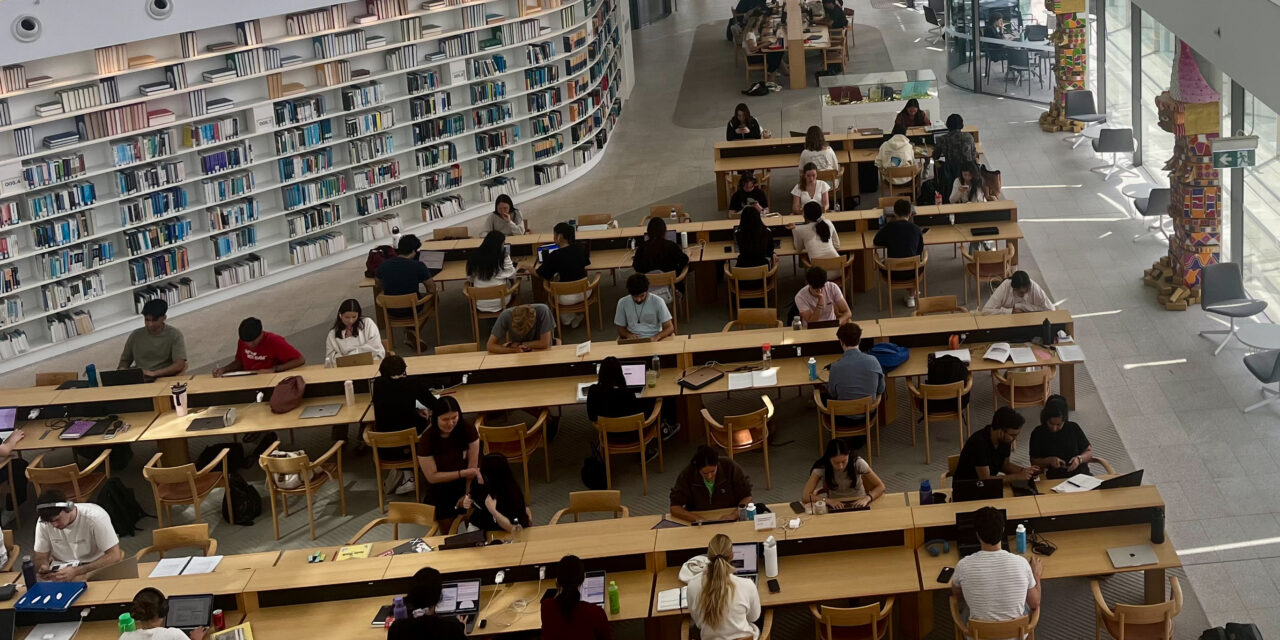
Main image of UTS Library by Charlie Gill


