By Ainslie McNally and Caitlin Young
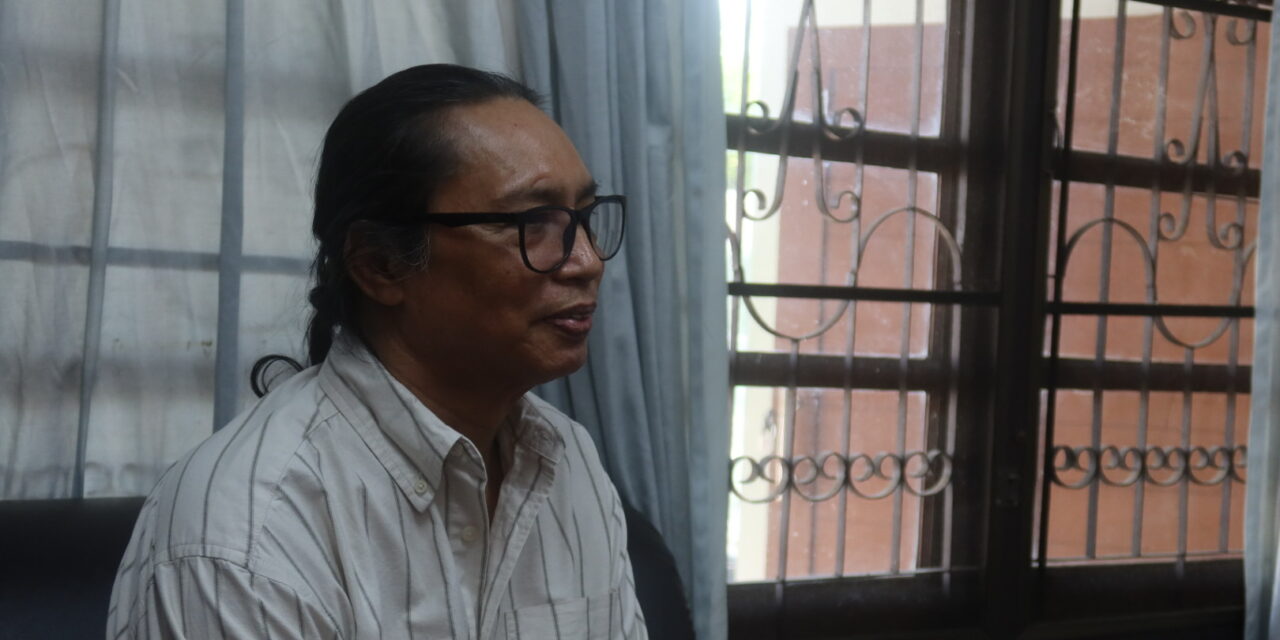
Thant Zaw has survived what few could ever fathom. For 23 years, he was imprisoned and tortured in a Myanmar prison by a military regime that has refused to relinquish its grip on power.
It was from his cell that Thant Zaw began to write. A political activist turned journalist, he firmly believes in the power of the media to expose the junta’s atrocities.
The 57-year-old works at Mizzima Media Group in Chiang Mai, Thailand. He lives next door to a country he can never return.
At just 20, Thant Zaw was falsely accused of bombing an oil refinery near Yangon, Myanmar’s largest city. The attack took place shortly after the military seized power in 1988 in a bloody coup in which thousands were killed.
“After the 1988 uprising, the junta cracked down very aggressively, very violently,” says Thant Zaw.
Thant Zaw says his involvement with the main opposition party, the National League for Democracy (NLD), brought him to the junta’s attention. He was charged with high treason and sentenced to death, a penalty that was commuted numerous times. For six years he lived in the same jail as the actual perpetrator who later admitted to carrying out the attack. Violence was a regular part of life behind bars.
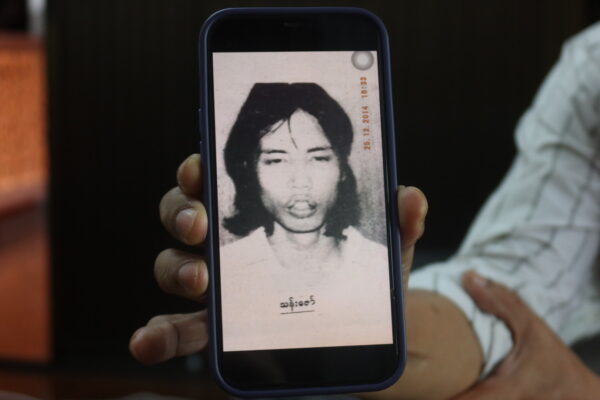
Thant Zaw’s mugshot from the day he arrived at Insein Prison in Yangon, Myanmar.
“For over two decades, I lived in a cell that was just 80 square feet…the guards would whip us [the prisoners] for hours, and only stop when we passed out,”
“Then the doctor who watched the beatings would finally intervene,” he said.
It was a cycle he thought would never end.
Thant Zaw bears the scars of those constant beatings and lives with chronic pain, but it is the memories of solitary confinement that plague him the most.
What kept him sane, then and now, was putting pen to paper. During his 23-year sentence, he authored six books and over 500 articles condemning the junta’s repressive rule. They were published in 2012 after his release, with one becoming a best seller.
It was the success of that book, The State’s Mistakes, that made him realise he had a future as writer and editor. His commitment to exposing the junta’s brutalities has never waned.
“Even now, I feel anger and resentment [towards the junta]. Writing was my way of getting revenge.”
But Thant Zaw’s experience is not an isolated one in a country of ruthless brutality and countless coups.
In 2021, the junta again seized power and overthrew Myanmar’s democratically elected leaders. The crackdown that followed emptied newsrooms across the nation. Scores of Burmese journalists were jailed, and more than a thousand fled into exile across Southeast Asia. Publishing licences were revoked, forcing outlets to shut down.
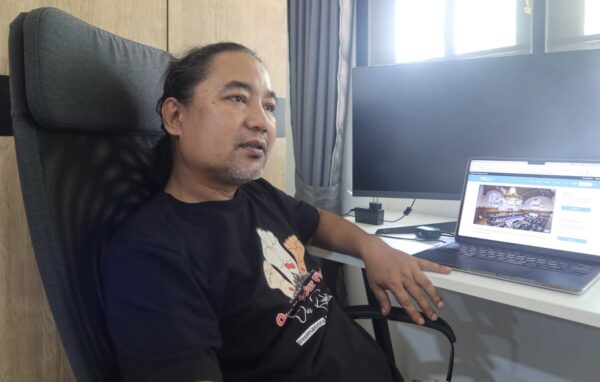
Myanmar Now Editor-in-Chief Myo Thant reviews leaked records on Myanmar’s military finances at his desk.
Myo Thant is a senior journalist and editor at Myanmar Now, an independent exiled media organisation based in Chiang Mai. In the aftermath of the 2021 coup, he was jailed. It was a one month sentence, while short, that changed his life. He fled into exile as soon as he was released.
Myo Thant points to the vertical scars that run down his shins. His skin is pale and taut. He becomes emotional when he recalls the pain he endured.
“They beat me for three days with my knees and head to the ground,”
“They didn’t think the ground was hard enough so they placed staples under my knees.”
Myo Thant says that he was relentlessly questioned about journalists who had already fled the country. Like so many others, his experience has only emboldened him to continue producing factual news.
“We have to keep reporting, that is our responsibility as journalists.”
Journalists adapt to surveillance
Across Myanmar, the junta tightly controls access to information. It has switched off the internet across much of the country after nationalising the telecommunications sector. In resistance-controlled territory, Elon Musk’s Starlink provides costly internet access while the rest of the country remains in digital darkness. Recent changes to the payment structure has made access to Starlink’s satellite internet even more expensive.
In Myanmar, just possessing news the regime wants buried is extremely dangerous.
“The military controls a lot of the news that is published every single day, so if you click, comment, like or share posts related to political issues you can be arrested,” says Myo Thant.
But where there is a will, there is a way. Journalists and civilians alike constantly seek ways to share information and tell stories, all while working to evade surveillance.
Locals are being arrested, tortured and killed. Women face sexual violence. Human life is considered to have no value. They kill anyone for no reason.
Hlwan Moe Moe, journalist reporting from inside Myanmar
Reporters at Myanmar Now use encrypted email and messaging apps such as Signal and Proton to communicate with colleagues in Myanmar. Exiled media organisations show readers how to access their sites via virtual private networks, or VPNs.
However, using a VPN or even having one installed on your phone is high-risk. Military check points are everywhere and soldiers are tasked with carrying out physical device inspections. This makes it harder for readers to safely access independent news.
Jason Nelson, English Editor at Myanmar Now, says that despite the military’s attempts to restrict internet and Starlink services, exiled media organisations continue to find new methods to locate and share information.
“There have been problems with people using VPNs getting blocked, but we always seem to manage to get through one way or the other. I think each side just adapts.”
Accessing information is only one part of the puzzle. Nelson says that real news is being polluted by disinformation and propaganda on digital platforms.
“Facebook was a godsend to the military, and to repressive regimes all over [the world].”
Reporting from inside the resistance
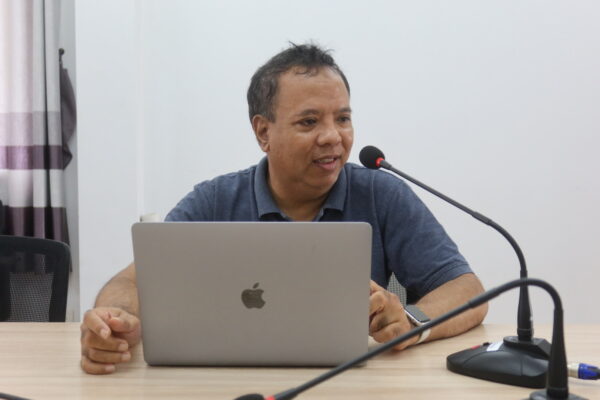
Sein Win coordinates the Mizzima newsroom that operates from an undisclosed location in Chiang Mai, Thailand.
Sein Win is the Editor-in-Chief at Mizzima Media Group, which broadcasts via 24 hour satellite into the country. They have more than twenty journalists reporting from inside the war torn nation.
He believes his reporters are driven by the hope that democracy will one day return to Myanmar.
Hlwan Moe Moe – not his real name – is one of the journalists reporting for Mizzima from the epicentre of armed resistance in the Sagaing Region. He is based in the resistance-controlled zone of Kani Township, just three kilometres away from a junta base.
“There is a lot of conflict. It is rather confronting, with artillery and scouting drones from the military site.”
While reporting, Hlwan Moe Moe has witnessed fighter jets drop bombs on civilian villages. He’s seen bloodied civilians shot as they’ve tried to flee the conflict. He tells of putting down his camera to take a woman to hospital while others lay critically wounded or dying in the street.
Despite the ongoing violence, Hlwan Moe Moe says he has no plans to leave Myanmar, as that would mean abandoning his elderly parents.
For most journalists operating inside Myanmar, resisting against a regime they despise involves taking a stand, knowing full well the danger this carries. When he isn’t writing, Hlwan Moe Moe is risking his safety to source food for his community.
“I do feel unsafe…I even sleep cautiously, never in a deep sleep, because I fear these things,” he says.
“I’m concerned about the junta bases being so close. I fear another [military] offensive that would threaten the resistance’s position.”
Hlwan Moe Moe says that his commitment to restoring democracy outweighs fears for his safety in a nation where reporting is illegal. What keeps him going is his belief that media freedom is vital to expose the junta’s war crimes.
“Locals are being arrested, tortured and killed. Women face sexual violence. Human life is considered to have no value. They kill anyone for no reason,”
“If I wasn’t here then these voices would not be heard outside of Myanmar.”
Main image of Thant Zaw by Ainslie McNally for Central News.