By Mahir Munot, Thomas Snow and Evan Hronis
The International Court of Justice (ICJ) has found that Myanmar, formerly Burma, committed genocide against its Rohingya population in a 9-6 vote ending seven years of legal proceedings.
The judgment, delivered in The Hague, is the first time the ICJ has found a state responsible for genocide, since its operation began 80 years ago.
The ruling is a long-awaited reckoning for the more than half a million Rohingya still living in Myanmar and the millions of others displaced across Bangladesh and southeast Asia, according to the United Nations Refugee Agency (UNHCR)
Delivering the judgment in The Hague, ICJ President Yuji Iwasawa declared that Myanmar “has committed genocide against the Rohingya group in northern Rakhine State, in violation of its obligations under the Genocide Convention”.
Rohingya political activist and co-founder of the Free Rohingya Coalition Nay San Lwin spoke to Central News from the courtroom in the Hague, where he witnessed the three hour judgement being read to the world.
“Today marks a historic milestone for the Rohingya people and reaffirms the fundamental principle that no state is above international law”, Lwin stated.
“This is not the end of our struggle. We will continue pursuing justice until our rights are restored and we can live freely, equally and safely in our homeland”
Lwin says that justice must go beyond legal recognition of genocide, to also include the restoration of Rohingya citizenship, recognition of their ethnic identity and the right to return to their homeland.
“The huge relief is we can return to our homeland with our rights and dignity”, he said.
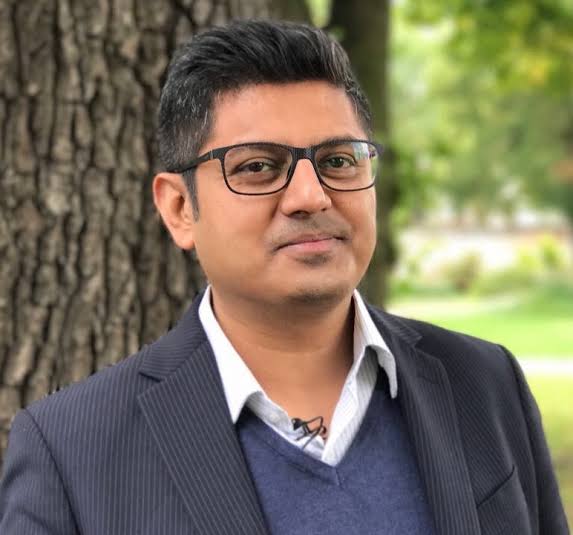
Pictured: Nay San Lwin (Supplied FORSEA)
The landmark case was brought under the Genocide Convention by African nation, The Gambia, marking the first time a state with no direct connection to the alleged crimes has brought a genocide case to the world’s highest court.
After hearing evidence from hundreds of impacted Rohingya villagers, the court was asked to consider a demand for reparations to ensure Myanmar pays for rehabilitation and recovery.
The court found conclusively that the Myanmar military killed large numbers of Rohingya; engaged in extensive sexual violence against women; prevented births and took deliberate action to end life and did so with genocidal intent.
In a statement, The Gambia’s Attorney General, Dawda A. Jallow, welcomed the landmark ruling, describing it as a victory for Rohingya survivors.
“Today the International Court of Justice confirmed what the Rohingya have said since 2017: what was done to them was genocide, and Myanmar is responsible,” Jallow said.
“This victory belongs to the Rohingya. They survived, they testified, and today they were believed.”
Matthew Smith is the founder and CEO of Fortify Rights, a non-profit organisation that investigates human rights abuses and worked with the Rohingya community to compile evidence to bring to the court.
“To see the Myanmar military have to sit through hours and hours and weeks of evidence and the presentation of evidence, was really an incredible thing to behold”, Smith said.
The accounts presented to the court were harrowing.
“Witness MS’s daughter was intentionally shot as she tried to flee. His wife and four other children were intentionally forced into a burning building to die. Witness NJ’s infant son was stabbed and thrown on a fire,” according to an excerpt from The Gambia’s final submissions accessible via the ICJ website.
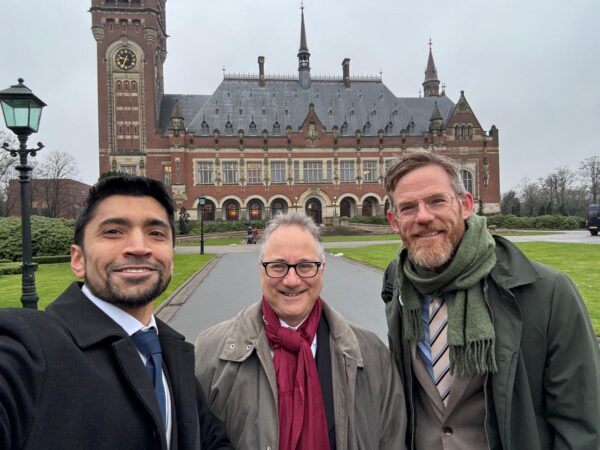
Matthew Smith (right), pictured alongside Andrew Loewenstein (middle) and Arsalan Sulemon, both members of The Gambia legal team Source: Matthew Smith.
But Smith cautioned that even a favourable ruling would not immediately improve conditions for Rohingya refugees.
“The Rohingya certainly, first and foremost, will know that they can’t eat a verdict from the ICJ”, he said. “Some of those problems the people are dealing with right now such as in the camps can’t be solved overnight”.
Where to from here?
The judgment raises the prospect for a comprehensive reparations program, renewed humanitarian assistance and further international action against Myanmar’s junta.
Smith also hopes it may prevent the military from “accessing revenues, weapons and other things that they’re using to further commit mass atrocity crimes”.
Through interviews with 242 Rohingya survivors, Fortify Rights examined the extreme restriction of rights imposed by the Myanmar military.
The case has been closely watched across the world for implications in the genocide case brought by South Africa against Israel over its war in Gaza.
The ICJ’s decisions are legally binding, but lack enforceability.
“The gaps are, obviously, in the implementation of the law, the execution of the law … at national and international level”, said Patrick Phongsathorn, a senior research fellow at Chiang Mai University’s School of Public Policy.
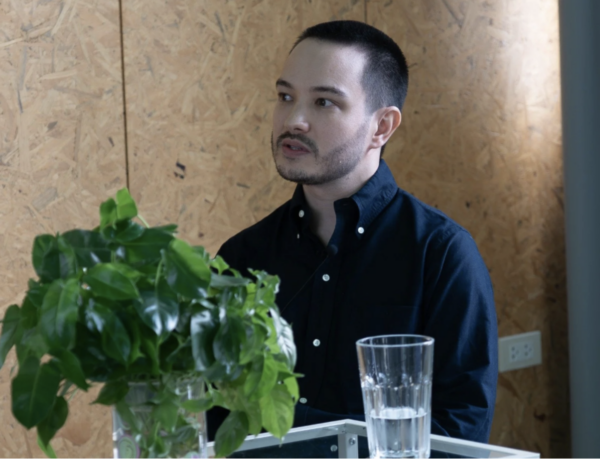
Phongsathorn is a former senior advocacy specialist at Fortify Rights, working closely with CEO Matthew Smith Source: The Fort.
One person who will be carefully considering the verdict is Myanmar’s military leader Min Aung Hlaing who was singled out in the court judgement for standing by and failing to intervene.
“There may actually already be an arrest warrant for Min Aung Hlaing from the ICC, and it could be under seal”.
“I would say Min Aung Hlaing’s days of enjoying the freedoms that he has been enjoying are numbered,” said Smith.
Who are the Rohingya?
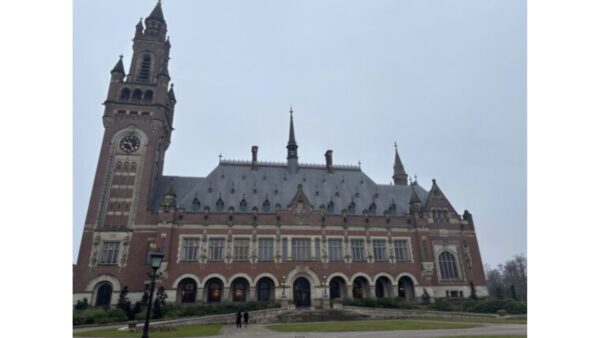
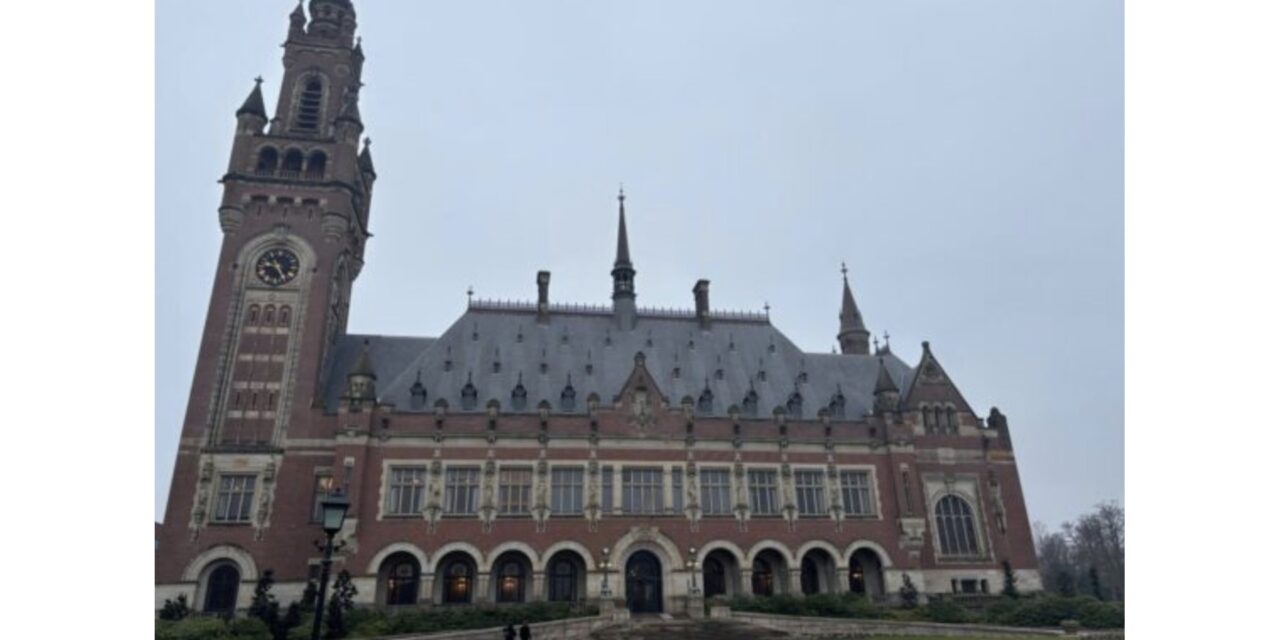
The Peace Palace in The Hague Source: Mathew Smith
The Rohingya, a predominantly Muslim minority from Myanmar’s westernmost Rakhine State, have been in conflict with the Myanmar military, facing decades-long persecution.
But in 2017, the violence against the Rohingya escalated dramatically, with widespread killings, sexual violence and villages set ablaze. According to the United Nations, more than 700,000 Rohingya were forced to flee across the border into neighbouring Bangladesh in search of safety.
Myanmar and Bangladesh have both refused to accept them as citizens but in today’s judgement the court ruled they were a distinct group with its own language, culture and customs.
“Our people have been living in the condition of an open-air prison since the early 1990s. I talked with the people: how women and girls were raped, how their babies were thrown into the fire”, said Lwin.
In 2019, Myanmar’s then-civilian leader and Nobel Peace Prize laureate Aung San Suu Kyi personally appeared before the ICJ to defend her country against the genocide allegations which left many of her supporters in dismay.
“The Gambia has placed before the Court an incomplete and misleading factual picture of the situation in Rakhine State in Myanmar”, she told the Court.
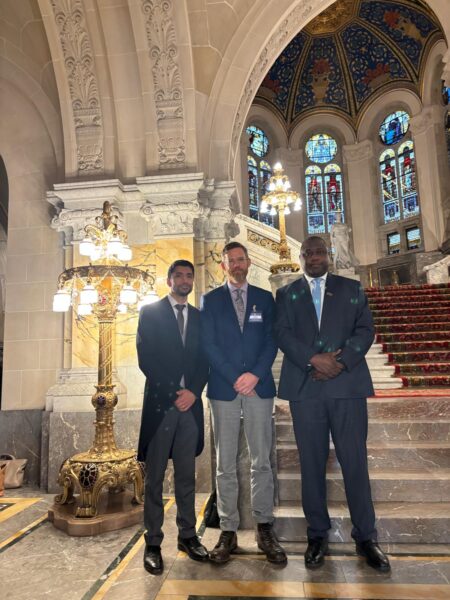
Matthew Smith (middle) with lead lawyer for The Gambia Arsalan Sulemon (right) and the Attorney General of The Gambia, Dawda A Jallow (right). Source: Matthew Smith.
Lwin, a regular visitor to refugee camps in Bangladesh, says he regularly encourages young Rohingyas to take a greater role in advocating for their rights.
“I tell them: you are not the future, you are the present,” he said.
“If you become a leader, I am ready to follow you.”
Smith also highlighted the unwavering determination of the Rohingya in their fight for human rights.
“The Rohingya, more than anybody, know the slow pace of international justice”, he said. “For me personally, the Rohingya give me more hope than I could ever hope to give [to the] Rohingya.”
Central News contacted the Myanmar consulate in Chiang Mai, Thailand and the Myanmar Embassy in Australia for comment but received no response at the time of publication.